Mouth breathing during sleep happens when a person inhales and exhales primarily through the mouth rather than the nose. For some, it occurs occasionally — during a cold or allergy flare-up. For others, it is a chronic pattern that persists night after night, sometimes beginning in early childhood.
The distinction matters because nasal and oral breathing are not physiologically equivalent. A growing body of published research has examined the causes, prevalence, and downstream effects of habitual nocturnal mouth breathing. This article summarizes what that research has found.
How common is mouth breathing?
Establishing exact prevalence is difficult because mouth breathing is often self-reported or observed by parents and bed partners rather than measured directly. Diagnostic criteria also vary between studies.
That said, the available data suggests mouth breathing during sleep is far from rare. A 2013 review published in the International Journal of Pediatrics examined multiple studies and found prevalence estimates for habitual mouth breathing in children ranging from roughly 11% to 56%, depending on the population studied and the methods used (PubMed, 2013). The wide range reflects differences in how researchers defined and identified the habit — some relied on parental questionnaires, others on clinical examinations or rhinometry.
In adults, the data is thinner. Population-level studies specifically measuring nocturnal mouth breathing in adults are relatively scarce. However, sleep medicine literature frequently references mouth breathing as a contributing factor in snoring and obstructive sleep apnea, suggesting it is common enough to be clinically relevant.
Children appear to be particularly susceptible. Adenoid and tonsillar hypertrophy — the enlargement of lymphoid tissue in the upper airway — peaks between ages three and six, which coincides with the age range where mouth breathing prevalence is highest.
What causes it?
Mouth breathing is not a single condition with a single cause. According to a 2013 review of etiological factors published on PubMed, the most frequently cited causes include (PubMed, 2013):
- Nasal obstruction. Anything that physically blocks the nasal passages can force breathing through the mouth. This includes swollen turbinates, nasal polyps, and mucosal inflammation from allergies or chronic rhinitis.
- Adenoid hypertrophy. Enlarged adenoids are one of the most common causes in children. The adenoid tissue sits at the back of the nasal cavity, and when it swells, it can partially or fully obstruct nasal airflow.
- Allergic rhinitis. Chronic nasal allergies cause persistent mucosal swelling and mucus production. Studies have found a strong association between allergic rhinitis and habitual mouth breathing in pediatric populations.
- Deviated nasal septum. A structural deviation of the septum — the wall between the two nasal passages — can reduce airflow on one or both sides.
- Habit. Some individuals continue breathing through the mouth even after the original obstruction has been resolved. Researchers have described this as “habitual mouth breathing,” where the pattern persists without an identifiable anatomical cause. This is more common in children who had prolonged nasal obstruction during early development.
In many cases, multiple factors overlap. A child with both allergic rhinitis and enlarged adenoids, for example, may develop a deeply ingrained mouth-breathing pattern that persists into adulthood.
What research has found about the consequences
The published literature on mouth breathing spans dentistry, sleep medicine, otolaryngology, cognitive science, and cardiovascular research. The effects documented in peer-reviewed studies touch several areas.
Dental and oral health
Saliva plays a central role in protecting teeth and gum tissue. It neutralizes acids, washes away food particles, and delivers calcium and phosphate ions to tooth enamel. When a person breathes through the mouth during sleep, the oral cavity dries out and salivary flow drops.
A 2020 review article published in PMC examined the relationship between mouth breathing and dental outcomes (PMC, 2020). The review found that habitual mouth breathing has been associated with:
- Higher rates of dental caries. Reduced saliva allows acid-producing bacteria to thrive. Several studies cited in the review found that children who were habitual mouth breathers had significantly more cavities than nasal breathers.
- Gingivitis. Drying of the gingival tissue appears to promote inflammation. Anterior gingivitis — redness and swelling of the gum tissue behind the upper lip — has been described as a clinical marker of mouth breathing.
- Malocclusion. Perhaps the most extensively studied dental consequence. Chronic mouth breathing during childhood development has been linked to changes in facial growth patterns, including a narrow upper dental arch, increased facial height, open bite, and crossbite. The theory, supported by orthodontic literature, is that the resting position of the tongue and the absence of nasal airflow alter the balance of forces acting on the growing maxilla and mandible.
These associations are particularly strong in children, whose facial bones are still developing. In adults, the dental effects tend to center on dry mouth and its consequences rather than structural changes.
Sleep quality and snoring
Mouth breathing and disordered sleep are closely linked in the research literature, though the direction of causation is not always clear.
When the mouth falls open during sleep, the lower jaw and tongue drop backward and downward. This repositioning narrows the pharyngeal airway and increases its collapsibility. The result, in many individuals, is snoring — the audible vibration of soft tissue in a partially obstructed airway.
A 2024 randomized controlled trial published in JAMA Otolaryngology — Head & Neck Surgery investigated whether keeping the mouth closed during sleep (using porous oral tape) affected snoring outcomes (JAMA, 2024). The trial found statistically significant reductions in snoring time and intensity among participants who used mouth tape compared to the control group. While the study was specifically investigating mouth taping as an intervention, the findings underscore the role that open-mouth breathing plays in snoring mechanics.
Beyond snoring, mouth breathing has been identified as a feature of obstructive sleep apnea (OSA). OSA involves repeated partial or complete collapse of the upper airway during sleep, leading to drops in blood oxygen levels and frequent arousals. Research has shown that patients with OSA are significantly more likely to be mouth breathers. Mouth breathing can also reduce the effectiveness of continuous positive airway pressure (CPAP) therapy, as air leaks through the open mouth and reduces the therapeutic pressure delivered to the airway.
Fragmented sleep — regardless of its cause — has downstream consequences. Studies have linked poor sleep quality to daytime fatigue, impaired concentration, mood disturbances, and reduced work performance.
Cognitive effects
A 2025 study published in Nature Scientific Reports examined the relationship between habitual mouth breathing and cognitive function (Nature, 2025). The researchers assessed working memory performance in participants who self-reported as habitual mouth breathers compared to those who breathed predominantly through the nose.
The study found that habitual mouth breathers demonstrated impaired working memory performance. The authors proposed several potential mechanisms, including chronic sleep disruption, reduced blood oxygenation during sleep, and the downstream effects of both on prefrontal cortex function. Working memory — the ability to hold and manipulate information over short periods — is considered a core cognitive capacity that underpins attention, reasoning, and decision-making.
Earlier studies have also reported associations between mouth breathing in children and lower academic performance, attention difficulties, and behavioral problems. A commonly cited Brazilian study found that children identified as mouth breathers were more likely to have learning difficulties and lower school grades, though the researchers noted that confounding factors such as sleep quality and socioeconomic status made it difficult to isolate mouth breathing as the sole cause.
These findings are correlational. Researchers have not established that mouth breathing directly causes cognitive impairment independent of sleep disruption. The relationship may be mediated by poor sleep quality, reduced oxygenation, or both.
Cardiovascular effects
Emerging research has begun to examine whether the mode of breathing during sleep affects cardiovascular parameters. A 2024 study presented through the American Physiological Society investigated differences in blood pressure between oral and nasal breathing during sleep.
The findings suggested that mouth breathing during sleep was associated with elevated blood pressure compared to nasal breathing. The proposed mechanisms involve autonomic nervous system activation — mouth breathing may increase sympathetic tone, which raises heart rate and vascular resistance. Nasal breathing, by contrast, appears to promote parasympathetic (vagal) activity, which is associated with lower resting heart rate and blood pressure.
This area of research is still developing. The number of controlled studies specifically comparing cardiovascular outcomes between mouth and nasal breathers during sleep remains small, and larger longitudinal studies are needed to confirm these initial findings.
What makes nasal breathing different
The nose is not simply an alternative opening for air. It is a complex organ with several physiological functions that the mouth does not replicate.
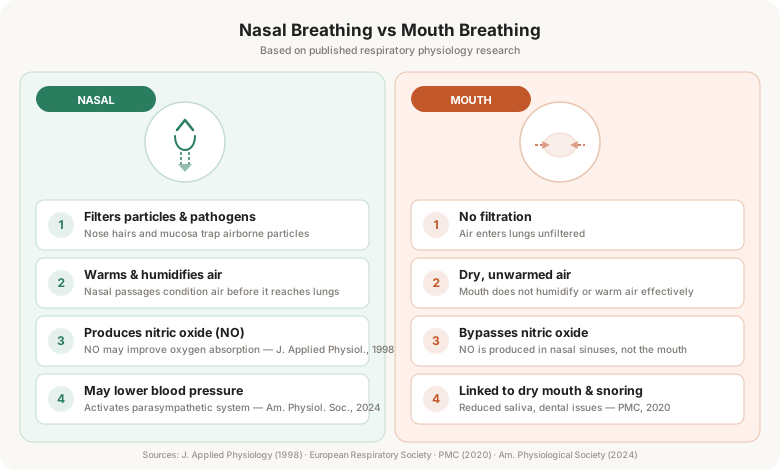
Filtration. The nasal passages are lined with mucous membranes and tiny hairs (vibrissae) that trap airborne particles, allergens, bacteria, and viruses before they reach the lower airways.
Humidification and warming. The turbinates — bony structures inside the nasal cavity covered with vascular tissue — warm and humidify inhaled air. By the time air reaches the lungs through the nose, it is close to body temperature and nearly fully saturated with moisture. Mouth-breathed air arrives cooler and drier, which can irritate the bronchial lining.
Nitric oxide production. Perhaps the most significant physiological distinction. The paranasal sinuses continuously produce nitric oxide (NO), a gas that is carried into the lungs with each nasal inhalation. A 1998 study published in the Journal of Applied Physiology demonstrated that nasally derived NO acts as a vasodilator in the pulmonary circulation, improving ventilation-perfusion matching and potentially enhancing oxygen uptake into the bloodstream (Journal of Applied Physiology, 1998). NO also has antimicrobial properties. Mouth breathing bypasses the sinuses entirely and delivers none of this endogenous NO to the lungs.
Airway resistance. Nasal breathing generates greater airway resistance than mouth breathing. This resistance is not a disadvantage — it slows expiratory flow, maintains positive pressure in the airways, and helps keep the lungs inflated. The effect is similar in principle to pursed-lip breathing, a technique used in pulmonary rehabilitation.
These differences are well-documented in respiratory physiology literature. They form the basis for the clinical interest in whether the breathing route — nasal versus oral — has meaningful health implications.
Signs commonly associated with mouth breathing
Published clinical literature and ENT textbooks describe several signs that clinicians look for when evaluating a patient for habitual mouth breathing. These include:
- Dry mouth upon waking. Reduced salivary flow during open-mouth breathing leads to a parched feeling in the morning.
- Morning sore throat. Unfiltered, unhumidified air passing over the pharyngeal tissue can cause irritation and soreness.
- Chronic bad breath (halitosis). Dry oral conditions promote bacterial growth and the production of volatile sulfur compounds.
- Daytime fatigue. If mouth breathing contributes to snoring or fragmented sleep, the result may be excessive daytime sleepiness despite adequate time in bed.
- Dry, cracked lips. Persistent airflow across the lips during sleep can cause chapping and fissuring.
- Snoring reported by a bed partner. Open-mouth sleeping increases the likelihood of soft palate vibration.
The presence of one or more of these signs does not confirm mouth breathing as the cause. Many of these symptoms overlap with other conditions, including dehydration, medication side effects, and primary sleep disorders. Clinical evaluation is needed to determine the underlying cause in any individual case.
Where the research stands
The body of published research on nocturnal mouth breathing has grown substantially over the past two decades. Studies across multiple disciplines — dental, ENT, sleep medicine, cognitive science, and cardiovascular research — have documented associations between habitual mouth breathing and a range of adverse outcomes, from dental decay and malocclusion to impaired sleep quality, reduced cognitive performance, and elevated blood pressure.
At the same time, much of this research is observational rather than experimental. Establishing clear causal relationships is challenging because mouth breathing rarely occurs in isolation — it typically coexists with nasal obstruction, allergies, sleep-disordered breathing, or other conditions that may independently affect health outcomes.
What is clear from the literature is that nasal and oral breathing are physiologically distinct processes. The nose performs filtration, humidification, warming, and nitric oxide delivery that the mouth does not. These differences have documented consequences for airway health, gas exchange, and cardiovascular regulation.
Anyone who suspects they may be a habitual mouth breather during sleep, or who experiences symptoms such as chronic dry mouth, snoring, or unrefreshing sleep, should consult a healthcare professional for proper evaluation and guidance.
Sources
- PubMed — Prevalence and etiology of mouth breathing in children (2013)
- PMC — Mouth breathing: adverse effects on facial growth, health, academics, and behavior (2020)
- JAMA Otolaryngology — Mouth taping during sleep and snoring (2024)
- Nature Scientific Reports — Habitual mouth breathing and cognitive function (2025)
- American Physiological Society — Cardiovascular effects of oral versus nasal breathing during sleep (2024)
- Journal of Applied Physiology — Nasal nitric oxide and regulation of pulmonary blood flow (1998)
Frequently Asked Questions
How common is mouth breathing during sleep?
A 2013 review in the International Journal of Pediatrics found prevalence estimates for habitual mouth breathing in children ranging from roughly 11% to 56%, depending on the population studied and methods used.
What causes mouth breathing at night?
The most frequently cited causes include nasal obstruction, adenoid hypertrophy, allergic rhinitis, deviated nasal septum, and habit formation where the pattern persists even after the original obstruction resolves.
What cognitive effects are associated with mouth breathing?
A 2025 Nature Scientific Reports study found that habitual mouth breathers demonstrated impaired working memory performance compared to nasal breathers. Earlier studies also reported associations with lower academic performance, attention difficulties, and behavioral problems in children.